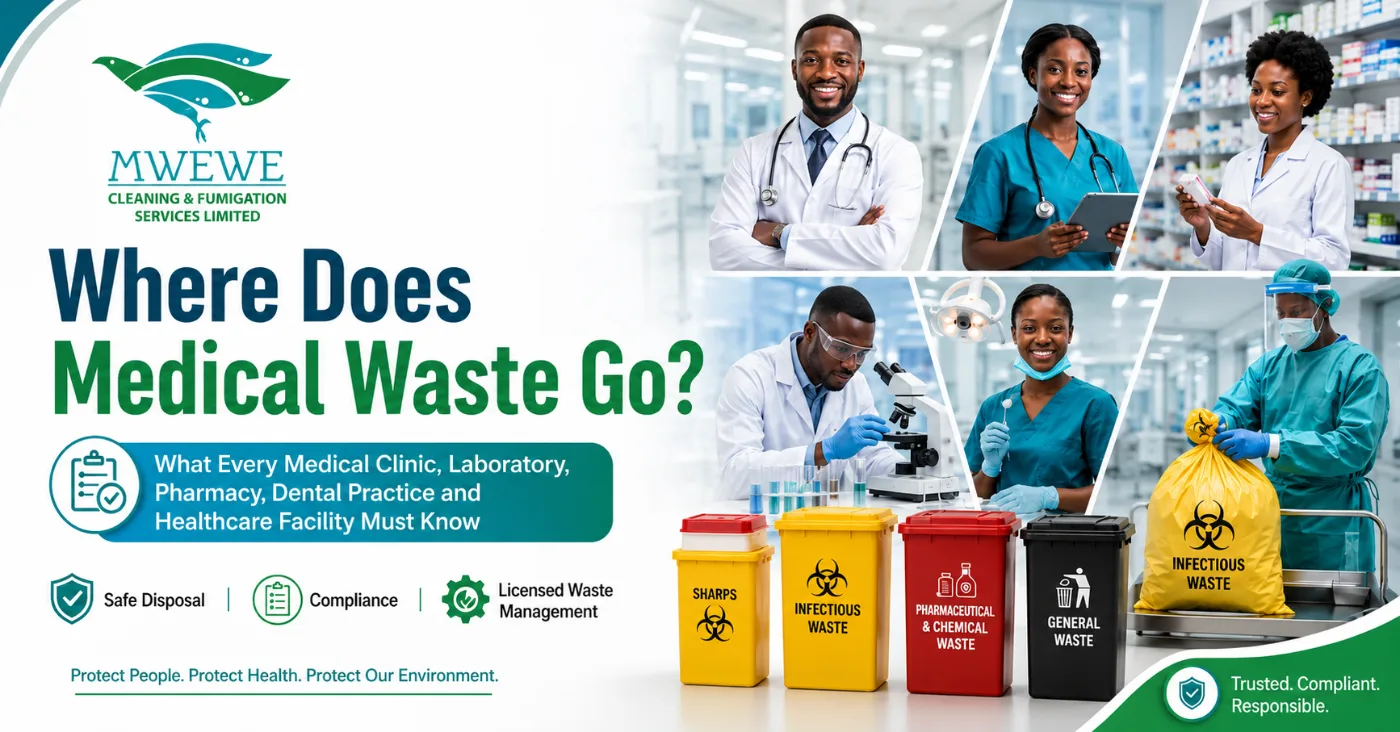
Hospitals, clinics, pharmacies, laboratories, dental practices, veterinary facilities and other healthcare institutions generate waste every day. Some of it is similar to ordinary office or household waste, but a significant portion may contain infectious materials, sharp objects, chemicals, expired medicines or other hazardous substances.
According to the World Health Organization, approximately 85% of healthcare waste is general, non-hazardous waste, while about 15% is hazardous and may be infectious, toxic, corrosive, flammable, reactive or radioactive. When hazardous waste is mixed with general waste, the entire load may become dangerous and more expensive to manage.
This is why healthcare facilities need a dependable and properly licensed waste-management partner. Mwewe Cleaning and Fumigation Services Limited supports healthcare facilities with safe medical-waste collection and disposal solutions, including the supply of suitable boxes and bags, scheduled pickups, labelling and the required collection documentation. For enquiries, facilities may contact Mwewe Cleaning & Fumigation Services Limited through +254 716 545488 / +254 785 466155 or email info@mwewecleaning.co.ke
So, where does this waste actually go?
Medical waste does not simply disappear after collection. It must be correctly separated, packaged, transported, treated and disposed of through approved channels. Poor handling can expose patients, healthcare workers, waste handlers and surrounding communities to injury, infection and environmental pollution.
Medical Waste Management Begins Inside the Healthcare Facility
Safe disposal does not begin when the waste collection vehicle arrives. It begins immediately after the waste is generated.
A healthcare facility remains responsible for ensuring that its waste is properly identified, separated, packaged, labelled, stored and handed over to an appropriately licensed waste service provider.
Kenya’s Waste Management Regulations require waste generators to separate hazardous waste from non-hazardous waste and place it in clearly labelled and colour-coded containers. Biomedical waste must be separated at the point of generation and remain segregated throughout handling, storage, transportation and disposal.
This means that a used needle should never be thrown into an ordinary waste bin. Blood-contaminated materials should not be mixed with food waste, paper or packaging. Expired medicines should not be poured into sinks or placed in general waste bags.
Proper segregation protects healthcare workers, cleaners, waste handlers, patients, visitors and the surrounding community.
The Main Types of Medical and Hazardous Waste
1. Sharps Waste
Sharps include:
- Needles and syringes
- Lancets
- Scalpel blades
- Infusion sets
- Broken medical glass
- Pipettes and other sharp laboratory items
Sharps can cause injuries and expose healthcare workers and waste handlers to blood-borne infections. They must be placed directly into approved, puncture-resistant sharps containers immediately after use.
Sharps containers should not be opened, compressed, shaken or overfilled. Once they reach the recommended fill level, they should be securely closed, labelled and stored for collection.
At the treatment facility, sharps may undergo approved treatment before the remaining material is destroyed, encapsulated or disposed of through an authorised method. The exact process must be determined by the waste category, available technology and the conditions of the treatment facility’s licence.
2. Infectious Waste
Infectious waste includes materials known or suspected to contain disease-causing microorganisms. Examples include:
- Blood-contaminated dressings and swabs
- Used gloves and protective clothing
- Laboratory cultures
- Waste from isolation areas
- Tubing, catheters and materials contaminated with body fluids
- Certain microbiological and diagnostic materials
If infectious waste is handled carelessly, it can expose staff, patients, waste handlers and the public to preventable infections. WHO also warns that unsafe healthcare-waste management may contribute to the spread of drug-resistant microorganisms.
This waste should be placed in the appropriate biohazard container, sealed, labelled and taken to an authorised treatment facility. Depending on the waste type and licence conditions, treatment may include steam-based treatment, autoclaving, approved high-temperature incineration or another technology authorised by NEMA.
3. Pathological and Anatomical Waste
Pathological waste may include human or animal tissues, organs, body parts, unused blood products and related materials.
Because of its sensitive and potentially infectious nature, this waste requires secure packaging, restricted access, careful documentation and treatment through an approved system. It should never be placed in general waste or transported without proper containment.
Healthcare facilities must also ensure that the handling of pathological waste protects patient dignity and confidentiality.
4. Expired and Unwanted Pharmaceutical Waste
Pharmaceutical waste includes:
- Expired medicines
- Damaged or recalled products
- Partially used medicines
- Contaminated medicine containers
- Substandard or falsified medical products
- Obsolete investigational products
- Cytotoxic medicines and contaminated materials
Kenya’s Pharmaceutical Waste Management Rules require pharmaceutical waste to be separated from other medical waste at the point of generation. Cytotoxic waste and compressed-container medicines, including aerosols and inhalers, must also be separated from other pharmaceutical waste.
Facilities should maintain an updated pharmaceutical-waste inventory showing the product name, active ingredient, dosage form, quantity, date and reason for disposal.
Pharmaceutical waste should be kept in a secure quarantine area away from usable medicines. The storage area should be clearly marked, locked and inaccessible to unauthorised persons.
A licensed transporter must take the waste to an approved pharmaceutical-waste disposal facility. Under Kenyan rules, pharmaceutical-waste disposal is supervised by the Pharmacy and Poisons Board, and a Certificate of Safe Disposal should be issued following compliant destruction.
Medicines should not be flushed down toilets or poured into sinks unless a specific disposal method is expressly permitted by the relevant regulations and authorised professionals. Uncontrolled disposal may contaminate water, soil and the wider environment.
5. Cytotoxic Waste
Cytotoxic waste is associated with medicines used in cancer treatment and other specialised therapies. It may include expired drugs, vials, tubing, gloves, containers and materials contaminated during preparation or administration.
It requires stricter control than ordinary pharmaceutical waste. Kenya’s pharmaceutical-waste rules state that cytotoxic drugs should not be landfilled. Permitted methods may include return to the original supplier, approved chemical degradation or high-temperature incineration at an authorised facility.
Cytotoxic waste must never be mixed with ordinary medicines, infectious waste or general waste.
6. Chemical Waste
Healthcare chemical waste may include:
- Laboratory reagents
- Solvents
- Disinfectants and sterilising chemicals
- Cleaning chemicals
- Heavy-metal-containing devices
- Batteries
- Formaldehyde and related substances
Different chemicals can react dangerously when mixed. Facilities must therefore identify incompatible chemicals and store them separately in appropriate, leak-resistant containers.
The label should identify the contents, hazards, generator and required handling precautions. Chemical waste should be collected only by a provider authorised to transport the relevant waste category.
7. Radioactive Waste
Radioactive waste may be generated by radiotherapy, nuclear medicine, diagnostic imaging and specialised laboratory procedures.
It must not enter an ordinary biomedical-waste stream. Management should follow the requirements of the relevant radiation authority, the facility’s radiation-safety procedures and any additional environmental obligations.
Only trained and authorised personnel should manage radioactive waste.
8. General, Recyclable and Organic Waste
Not every item generated in a hospital is hazardous. Office paper, uncontaminated packaging, food waste and similar materials may be classified as general waste.
However, these materials can only remain non-hazardous when they are properly separated from infectious, pharmaceutical and chemical waste. Once contaminated, they may require treatment as hazardous waste.
Where safe and practical, uncontaminated paper, cardboard, plastics and other materials can be directed to approved recycling systems. Waste minimisation, careful purchasing and proper stock control can also reduce the amount requiring treatment.
The Medical-Waste Journey: From the Facility to Final Disposal
Stage 1: Segregation at the Point of Generation
Waste should be placed in the correct container immediately after it is generated. Staff should not leave waste on work surfaces or attempt to separate mixed waste later.
Bins and containers should be:
- Correctly colour-coded
- Clearly labelled
- Appropriate for the waste type
- Positioned close to the point of use
- Kept upright and in good condition
- Replaced before they become overfilled
Clear segregation reduces exposure risks and prevents ordinary waste from becoming contaminated.
Stage 2: Sealing, Labelling and Internal Collection
Waste bags and boxes should be securely closed before they leave the treatment area. Labels should identify the waste type, healthcare facility, department or source and other required information.
Hazardous-waste labels should be legible and provide clear warnings. Kenya’s regulations require hazardous-waste packages to be labelled in English and Kiswahili and include information about the waste identity, generator and relevant caution statements.
Internal collection should be carried out by trained personnel wearing suitable protective equipment. Waste should follow a designated route that minimises movement through patient areas, kitchens, pharmacies and public spaces.
Stage 3: Secure Temporary Storage
Before collection, waste should be held in a secure, designated storage area.
A suitable storage area should:
- Be protected from rain, heat, animals and unauthorised access
- Have washable surfaces
- Be easy to clean and disinfect
- Be clearly marked
- Separate incompatible waste categories
- Have spill-response materials available
- Allow waste quantities and collection dates to be monitored
Medical waste should not remain in corridors, open yards, public areas or ordinary refuse points.
Stage 4: Collection by a Licensed Waste Transporter
This is one of the most important compliance points.
Under Kenya’s current Waste Management Regulations, no person may transport waste without a valid NEMA transportation licence. The licence is issued for a specified period, and each waste-transport vehicle must be properly labelled with the type of waste it carries.
A compliant transporter should use vehicles and equipment designed to prevent:
- Leakage
- Spillage
- Scattering
- Contamination
- Exposure to the public
- Release of unpleasant or hazardous emissions
The transporter must also carry a properly completed waste tracking note. This document creates a traceable record showing where the waste came from, what was collected, who transported it and where it was delivered.
A healthcare facility should never hand medical waste to an informal collector or general garbage transporter simply because the service is cheaper.
Stage 5: Delivery to a Licensed Treatment or Disposal Facility
A transporter’s licence alone is not enough.
The destination facility must also have a valid licence to operate as a waste storage, processing, treatment or disposal facility. The licence should cover the specific type of waste being delivered.
Kenya’s Waste Management Regulations prohibit the operation of a waste disposal plant or site without a valid licence. The licence identifies the permitted operation and the waste category the facility is authorised to receive.
Healthcare managers should therefore confirm both sides of the chain:
- Is the collector authorised to transport this waste?
- Is the receiving facility authorised to treat or dispose of this specific waste?
Delivering hazardous waste to an unauthorised destination does not become compliant simply because it was transported in a branded vehicle.
Stage 6: Treatment
Treatment reduces or eliminates the biological, chemical or physical hazards contained in waste.
Depending on the waste stream, approved treatment may include:
- Autoclaving or steam treatment
- Chemical treatment
- Microwaving
- Encapsulation or inertisation
- Approved high-temperature incineration
- Specialist recovery or recycling
- Return-to-supplier programmes
No single treatment method is appropriate for every type of medical waste.
For example, autoclaving may be suitable for certain infectious waste but not for cytotoxic, chemical or radioactive waste. Incineration can be necessary for specific waste streams, but poorly operated or low-temperature incineration may release harmful pollutants. WHO recommends considering safer non-incineration technologies where they are technically appropriate and adequately maintained.
Stage 7: Final Disposal and Documentation
Treatment does not always mark the end of the waste journey. Ash, treated materials, residues and by-products must also be managed according to the treatment facility’s licence.
The healthcare facility should receive supporting records such as:
- Collection notes
- Waste tracking or consignment documents
- Weight or quantity records
- Treatment confirmation
- Disposal certificates, where applicable
- Pharmaceutical certificates of safe disposal
- Incident or spill reports, where necessary
These documents should be retained for internal audits, inspections and regulatory verification.
What Licences Should a Healthcare Facility Check?
Before appointing a medical-waste service provider, management should request and verify:
A Valid NEMA Waste Transportation Licence
The licence should be current and appropriate for the waste being collected.
Vehicle Details
The vehicle collecting the waste should correspond with the authorised transport arrangements, be properly labelled and be designed to prevent leaks and spills.
A Valid Treatment or Disposal Facility Licence
The receiving plant must be authorised to accept and treat the particular waste category.
Waste Tracking Documentation
Every collection should be documented from the healthcare facility to the final destination.
Pharmaceutical-Waste Approvals
Expired and unwanted medicines require compliance with Pharmacy and Poisons Board procedures, including supervised disposal and certification where required.
Relevant County and Lead-Agency Approvals
Biomedical-waste-generating facilities must also comply with applicable approvals from the relevant lead agencies and county government. Kenya’s regulations additionally place environmental licensing obligations on facilities generating biomedical or hazardous waste.
Licences should be checked regularly because an old, expired or suspended licence does not provide legal protection.
Compliance Is Not Just the Waste Collector’s Responsibility
Outsourcing waste collection does not remove the healthcare facility’s responsibility.
Management should maintain a functioning medical-waste system that includes:
- A written waste-management plan
- An appointed waste-management or infection-prevention officer
- Clear staff responsibilities
- Staff induction and refresher training
- Proper containers and labels
- Waste-generation records
- Collection schedules
- Spill and exposure procedures
- Contractor licence verification
- Internal inspections and periodic audits
Every person handling waste should understand what belongs in each container, what to do when a container is full and how to report a spill, damaged package or sharps injury.
Common Medical-Waste Mistakes That Put Facilities at Risk
Healthcare organisations should avoid:
- Mixing infectious and general waste
- Placing needles in ordinary bags
- Overfilling sharps containers
- Storing medical waste in public or unsecured areas
- Burning waste in open pits
- Using unlicensed collectors
- Sending waste to an unknown destination
- Pouring expired medicines or chemicals into drains
- Failing to keep collection and disposal records
- Accepting certificates without confirming that treatment actually occurred
- Assuming that all branded waste companies hold the correct licences
- Allowing untrained cleaners to handle hazardous waste
Poor waste management may lead to worker injuries, infections, environmental contamination, regulatory penalties, reputational damage and loss of public confidence.
How Mwewe Cleaning and Fumigation Supports Healthcare Facilities
Mwewe provides medical-waste management support designed to make collection safer, more organised and easier to document.
Depending on the facility’s needs, the process may include:
- Preassembled medical-waste boxes and bags
- Scheduled collection when containers are ready
- Sealing and labelling by trained technicians
- Preparation and processing of relevant collection paperwork
- Removal using appropriate waste-handling procedures
- Delivery to an authorised treatment facility
- Support for sharps, infectious and expired pharmaceutical-waste streams
Our goal is to help hospitals, clinics, laboratories, pharmacies, dental practices and other healthcare facilities maintain a clear, traceable waste-management process.
Before Your Next Collection, Ask These Questions
Is our waste properly segregated?
Are our sharps containers sealed and within the recommended fill level?
Is the temporary storage area secure?
Is the transporter’s licence current?
Is the vehicle authorised and properly labelled?
Where exactly will the waste be treated?
Is the treatment facility licensed for this waste category?
Will we receive a tracking note and proof of disposal?
For pharmaceutical waste, will the required supervision and safe-disposal certification be completed?
If these questions cannot be answered clearly, your facility may have a compliance gap.
Safe Waste Disposal Protects More Than Your Facility
Medical-waste management is not simply a cleaning function. It is part of infection prevention, occupational safety, environmental responsibility and legal compliance.
The waste generated during patient care does not disappear when it leaves the treatment room. It remains the responsibility of everyone involved until it has been collected, transported, treated and disposed of through an authorised system.
Do not allow your medical waste to become someone else’s health risk.
Contact Mwewe Cleaning and Fumigation for professional medical and hazardous-waste collection support, compliant documentation and a safer, more traceable disposal process.