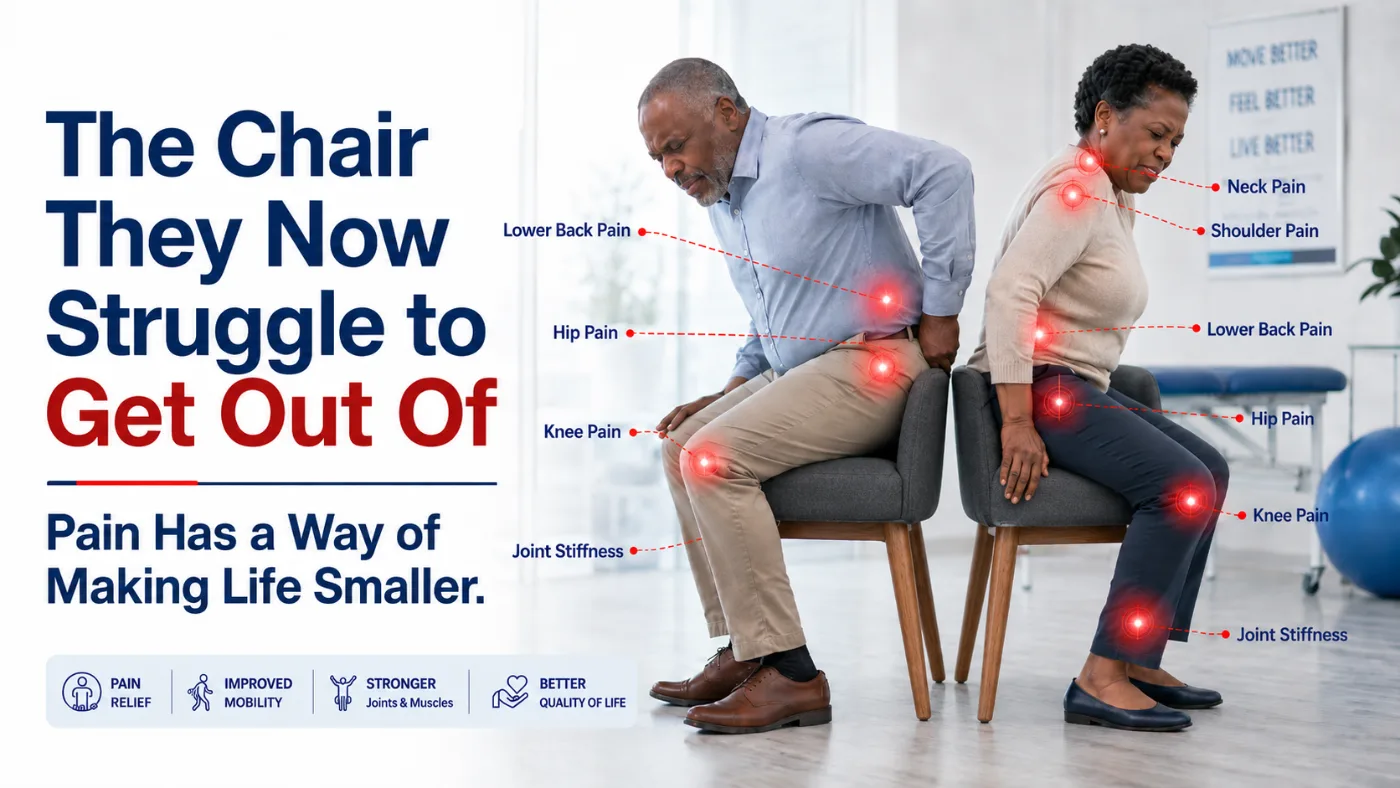
The Chair They Now Struggle to Get Out Of
Pain Has a Way of Making Life Smaller
Getting out of a chair should be a simple movement.
But for many people living with pain, stiffness, muscle weakness or joint problems, standing up can slowly become difficult. They may need to push themselves up using their hands, pause before taking the first step, avoid low seats or experience pain every time they rise.
These small changes can be easy to ignore. Yet they may be signs that the body is no longer moving as efficiently as it should.
At Spectrum Physiotherapy, we believe pain should not simply be accepted as something you have to live with. Understanding what is causing the difficulty is the first step towards improving movement, strength and independence. We help people manage pain, restore movement, rebuild strength and return to the everyday activities that matter most. We offer high-quality physiotherapy services in Kenya, delivered by professional, motivated, highly skilled and friendly therapists who take time to understand each patient’s condition and rehabilitation needs.
Getting out of a chair should be a simple movement.
Book a Physiotherapy Assessment
Spectrum Physiotherapy
Professional, highly skilled and friendly physiotherapy care in Kenya.
Email: info@spectrumhospital.co.ke
Kitengela: (+254) 746 563 383
Along Namanga Highway, Opposite Nairobi Women’s Hospital, Olive Business Centre, Ground Floor.
Syokimau: +254 791 681 665
Pacific Mall, next to Mastermind, near Katani Road.
Don’t wait until pain begins deciding what you can and cannot do.
Get assessed and start working towards better movement.
When Sitting Down and Standing Up Becomes Difficult
Standing from a chair involves several parts of the body working together. The hips, knees, lower back, core muscles and leg muscles all contribute to the movement.
When one or more of these areas is affected, something as ordinary as getting up can become painful or exhausting.
Some common causes include:
1. Knee Osteoarthritis
Osteoarthritis can cause pain, stiffness and reduced movement in the knee joint.
People with knee osteoarthritis may notice discomfort when:
- Standing from a chair
- Climbing stairs
- Squatting
- Walking for long periods
- Getting out of a car
Weakness in the muscles around the knee can make these activities even more difficult.
Physiotherapy may help improve joint movement, strengthen the muscles supporting the knee and make everyday activities easier.
2. Lower Back Pain
Lower back pain can make changing positions uncomfortable.
After sitting for some time, a person may feel stiff when trying to stand. Some may need a few moments before they can fully straighten their back.
Lower back pain may be associated with muscle strain, poor movement patterns, disc-related conditions, reduced core strength or prolonged sitting.
A physiotherapy assessment can help identify the factors contributing to the pain and guide an appropriate rehabilitation programme.
3. Hip Osteoarthritis and Hip Pain
The hip joint plays a major role when standing from a seated position.
Hip problems may cause:
- Groin pain
- Hip stiffness
- Difficulty getting out of low chairs
- Reduced walking ability
- Difficulty putting on shoes or socks
- Pain when getting in or out of a vehicle
Physiotherapy can focus on improving hip mobility, strengthening surrounding muscles and maintaining functional movement.
4. Muscle Weakness
Sometimes the problem is not only pain.
Weakness in the thighs, hips and core muscles can make standing from a chair increasingly difficult.
Muscle weakness may develop due to ageing, prolonged inactivity, illness, injury, surgery or spending long periods without regular physical activity.
The less these muscles are used, the weaker they may become.
A structured strengthening programme can help rebuild the muscles required for standing, walking and maintaining balance.
5. Balance Problems
Difficulty getting out of a chair may also be linked to poor balance.
A person may hesitate before standing because they are worried about feeling unstable or falling.
Balance problems can occur for several reasons, including muscle weakness, neurological conditions, reduced coordination or changes in mobility.
Physiotherapists can assess balance and develop exercises aimed at improving stability, strength and confidence during movement.
6. Previous Injuries
An old injury does not always completely disappear simply because the initial pain reduced.
Previous injuries involving the knee, hip, ankle, spine or muscles can sometimes change the way a person moves.
Over time, compensation patterns may place additional stress on other joints and muscles.
Physiotherapy can assess current movement patterns and help address weakness, stiffness or limitations that may remain after an injury.
7. Recovery After Surgery
After procedures such as knee replacement, hip replacement, spinal surgery or fracture repair, patients often need rehabilitation to regain strength and mobility.
Without adequate rehabilitation, normal activities such as standing, walking, climbing stairs or getting into a car may remain difficult.
Physiotherapy plays an important role in restoring movement gradually and safely after surgery.
Pain Can Slowly Reduce Independence
Pain does not always stop someone suddenly.
Sometimes it changes life little by little.
A person starts avoiding stairs.
Then they stop walking long distances.
They begin choosing higher chairs because lower seats are difficult.
They stop exercising.
They become less active.
As activity decreases, muscles may become weaker and movement can become even more difficult.
This creates a cycle:
Pain → Less movement → Muscle weakness → More difficulty moving → More pain
Breaking this cycle early can make a significant difference.
Do Not Ignore the Small Signs
Difficulty standing from a chair may seem minor, but it is worth paying attention to when it becomes frequent.
Other signs that may require assessment include:
- Persistent joint pain
- Increasing stiffness
- Difficulty walking
- Reduced balance
- Recurrent back pain
- Limping
- Weakness in the legs
- Difficulty climbing stairs
- Reduced ability to perform normal daily activities
- Pain that continues after an injury
- Increasing dependence on furniture or other people when standing
Early assessment can help identify the underlying problem before mobility becomes significantly affected.
How Physiotherapy Can Help
Physiotherapy is not only about treating pain.
It focuses on improving how the body moves and functions.
Depending on the condition, a physiotherapy programme may include:
- Pain management strategies
- Strengthening exercises
- Mobility exercises
- Joint movement techniques
- Balance training
- Posture and movement education
- Rehabilitation after injury or surgery
- Walking and functional training
- Advice on safely returning to normal activity
Treatment should always be based on an individual assessment because the cause of difficulty may vary from one person to another.
Movement Is Part of Independence
Being able to stand, walk, climb stairs and move comfortably allows people to remain active and independent.
When these abilities begin becoming difficult, it is worth finding out why.
Pain may start with one uncomfortable movement.
But when ignored for too long, it can begin affecting many parts of daily life.
Pain has a way of making life smaller. Physiotherapy can help you work towards moving better, staying stronger and protecting the independence that everyday movement gives you.
Spectrum Physiotherapy
If pain, stiffness or weakness is beginning to affect your everyday movement, consider having it professionally assessed.
Spectrum Physiotherapy — helping you move better, recover stronger and return to the activities that matter